Q21GATE 2007MCQ
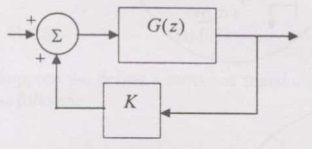
Consider the discrete-time system shown in the figure where the impulse response of G(z) is g(0)=0, g(1)=g(2)=1, g(3)=g(4)=...= 0 This system is stable for range of values of K
GATE EE · Signals And Systems
Generate GATE-level questions on Z-Transform. Focus on: 1. Region of Convergence (ROC) for discrete-time signals. 2. Properties of Z-Transform: Linearity, Shifting, and Convolution. 3. System function H(z), Stability, and Causality analysis.
25 questions · 5 PYQs · 0 AI practice · GATE EE 2027
Consider the discrete-time system shown in the figure where the impulse response of G(z) is g(0)=0, g(1)=g(2)=1, g(3)=g(4)=...= 0 This system is stable for range of values of K
, are Z transforms of two signals x[n],y[n] respectively. A linear time invariant system has the impulse response h[n] defined by these two signals as h[n] = x[n-1] * y[n] where * denotes discrete time convolution. Then the output of the system for the input [n-1]
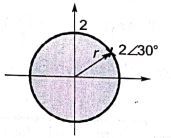
A discrete real all pass system has a pole at z = 2 30 : it, therefore
The discrete-time signal where denotes a transform-pair relationship, is orthogonal to the signal
If u(t) is the unit step and is the unit impulse function, the inverse z-transform of F(z)= for is
Want unlimited AI-generated Z Transform questions?
Sign up free and practice with adaptive difficulty — Easy, Medium, Hard. New questions every session.
Start practising for free →