Q81JEE Main 2021NAT
Two travelling waves produces a standing wave represented by equation. The node closest to the origin in the region will be at x is ......... .
JEE Main · Physics
Generate JEE Main level questions on Waves. Focus on Doppler effect, Beats, and Standing waves.
152 questions · 20 PYQs · 0 AI practice · JEE Main 2027
Two travelling waves produces a standing wave represented by equation. The node closest to the origin in the region will be at x is ......... .
Speed of a transverse wave on a straight wire (mass 6.0 g, length 60 cm and area of cross-section 1.0 mm) is 90 ms. If the Young's modulus of wire is 16 × Nm, the extension of wire over its natural length is : [7-Jan-2020 Shift 1]
A one metre long (both ends open) organ pipe is kept in a gas that has double the density of air at STP. Assuming the speed of sound in air at STP is 300 m/s, the frequency difference between the fundamental and second harmonic of this pipe is _________Hz.
Three harmonic waves having equal frequency v and same intensity , have phase angles and respectively . When they are superimposed the intensity of the resultant wave is close to :
Assume that the displacement(s) of air is proportional to the pressure difference created by a sound wave. Displacement(s) further depends on the speed of sound (v), density of air and the frequency (f). If and then will be the order of (take multiplicative constant to be 1 )
For a transverse wave travelling along a straight line, the distance between two peaks (crests) is while the distance between one crest and one trough is . The possible wavelengths (in ) of the waves are :
A stationary observer receives sound from two identical tuning forks, one of which approaches and the other one recedes with the same speed (much less than the speed of sound). The observer hears 2 beats/sec. The oscillation frequency of each tuning fork is Hz and the velocity of sound in air is 350 m/s. The speed of each tuning fork is close to
The driver of a bus approaching a big wall notices that the frequency of his bus's horn changes from to when he hears it after it gets reflected from the wall. Find the speed of the bus if speed of the sound is
A driver in a car, approaching a vertical wall notices that the frequency of his car horn, has changed from to when it gets reflected from the wall. If the speed of sound in air is then the speed of the car is
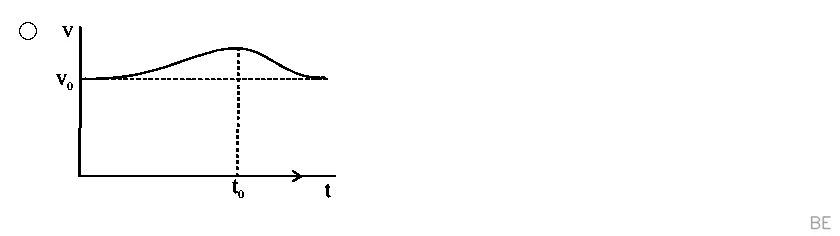
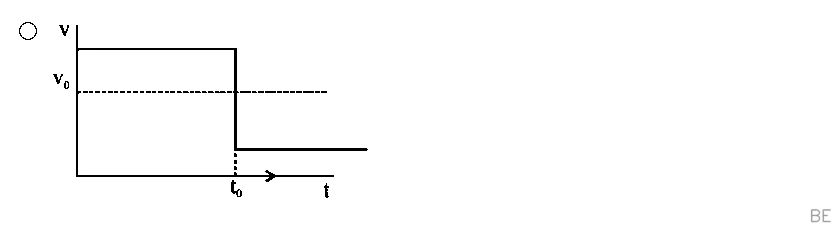
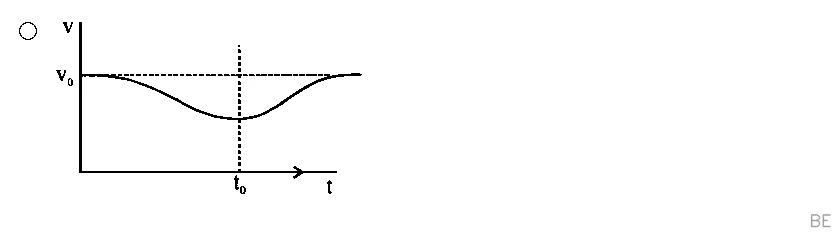
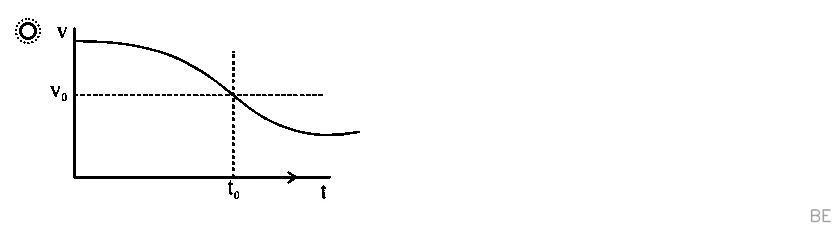
A sound source is moving along a straight track with speed and is emitting sound of frequency (see figure). An observer is standing at a finite distance, at the point from the track. The time variation of frequency heard by the observer is best represented by : (t represents the instant when the distance between the source and observer is minimum)
A transverse wave travels on a taut steel wire with a velocity of v when tension in it is . When the tension is changed to T, the velocity changed to . The value of T is close to :
In a resonance tube experiment when the tube is filled with water up to height of frombottom, it resonates with a given tuning fork. When the water level is raised the nextresonance with the same tuning fork occurs at a height of If the velocity of sound in air is the tuning fork frequency is:
A wire of length L and mass per unit length 6.0 × 10 kgm is put under tension of 540 N. Two consecutive frequencies that it resonates at are : 420 Hz and 490 Hz. Then L in meters is :
A uniform thin rope of length and mass hangs vertically from a rigid support and a block of mass is attached to its free end. A transverse short wavetrain of wavelength is produced at the lower end of the rope. What is the wavelength of the wavetrain (in ) when it reaches the top of the rope?
Two identical strings and made of same material have tension and in them. It their fundamental frequencies are and respectively, then the ratio is :
A stationary source emits sound waves of frequency 500Hz. Two observers moving along a line passing through the source detect sound to be of frequencies 480 Hz ad 530Hz. Their respective speeds are,in ms (given speed of sound =300 m/s)
Two sources of sound and produce sound waves of same frequency 660 Hz. A listener is moving from source towards v with a constant speed u m/s and he hears 10 beats/s. The velocity of sound is 330 m/s. Then, u equals
A string of length 1 m and mass 5 g is fixed at both ends. The tension in the string is 8.0 N. The siring is set into vibration using an external vibrator of frequency 100 Hz. The separation between successive nodes on the string is close to :
A small speaker delivers 2 W of audio output. At what distance from the speaker will one detect 120dB in intensity sound? $[Given reference intensity of sound as ]$
A string 2.0 m long and fixed at its ends is driven by a 240 Hz vibrator. The string vibrates in its third harmonic mode. The speed of the wave and its fundamental frequency is :
Want unlimited AI-generated Waves questions?
Sign up free and practice with adaptive difficulty — Easy, Medium, Hard. New questions every session.
Start practising for free →




