Q161JEE Main 2020NAT
The standard heat of formation of ethane in (kJ/mol), if the heat of combustion of ethane, hydrogen and graphite are -1560, -393.5 and -286 kJ/mol, respectively is _____ .
JEE Main · Chemistry
Generate JEE Main level questions on Enthalpy, Entropy, and Gibbs free energy.
233 questions · 20 PYQs · 0 AI practice · JEE Main 2027
The standard heat of formation of ethane in (kJ/mol), if the heat of combustion of ethane, hydrogen and graphite are -1560, -393.5 and -286 kJ/mol, respectively is _____ .
The entropy change associated with the conversion of 1 kg of ice at 273 K to water vapours at 383 K is : (Specific heat of water liquid and water vapour are 4.2 kJ and 2.0 kJ ; heat of liquid fusion and vapourisation of water are 344kJ and 2491 kJ , respectively). (log 273 = 2.436, log 373 = 2.572, log 383 = 2.583)
The reaction, MgO(s) + C(s)®Mg(S) + CO(g), for which = + 491.1 kJ and = 198.0 , is not feasible at 298 K. Temperature above which reaction will be feasible is :-
For diatomic ideal gas in a closed system, whichof the following plots does not correctly describethe relation between various thermodynamicquantities ?
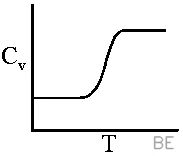


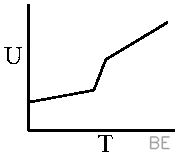
Enthalpy of sublimation of iodine is 24 at . If specific heat of and are 0.055 and 0.031 respectively, then enthalpy of sublimation of iodine at 250°C in is:
A process will be spontaneous at all temperatures if :
The combination of plots which does notrepresent isothermal expansion of an ideal gasis:

Given : (i) C(graphite) + (g) → (g) ;ΔrH° = x kJ (ii) C(graphite) + (g) → (g) ; ΔrH° = y kJ (iii) CO (g) + (g) → (g) ; ΔrH° = z kJ Based on the above thermochemical equations,find out which one of the following algebraicrelationships is correct ?
A process has ΔH = 200 and ΔS = 40 . Out of the values given below, choose the minimum temperature above which the process will be spontaneous :
An ideal gas is allowed to expand from 1L to 10 L against a constant external pressure of 1 bar. The work done is kJ is:
An ideal gas undergoes isothermal compression from 5 against a constant external pressure of 4 . Heat released in this process is used to increase the temperature of 1 mole of Al. If molar heat capacity of Al is 24 J , the temperatureof Al increases by :
5 moles of an ideal gas at 100 K are allowed to undergo reversible compression till its temperature becomes 200 K. If , calcuIate ΔU and ΔPV for this process.
The difference between and , when the combustion of one mole heptane (I) is carried out a temperature T, is equal to :
Which one of the following equations does not correctly represent the first law of thermodynamics for the given processes involving an ideal gas? (Assume nonexpansion work is zero)
Among the following, the set of parameters that represents path functions, is: A) q+w B) q C) w D) H-TS
The process with negative entropy change is :
For silver, . If the temperature (T) of 3 moles of silver is raised from 300 K to 1000 K at 1 atm pressure, the value of ΔH will be close to :
During compression of a spring the work done is 10 kJ and 2 kJ escaped to the surroundings as heat. The change in internal energy, (in kJ) is:
Consider the reversible isothermal expansion of an ideal gas in a closed system at two different temperatures and ( < ). The correct graphical depiction of the dependence of work done (w) on the final volume (V) is: [9-Jan-2019 Shift 1]


For the chemical reaction X ⇌ Y , thestandard reaction Gibbs energy depends ontemperature T (in K) as : G° (in kJ ) = 120 - T The major component of the reaction mixture atT is :
Want unlimited AI-generated Chemical Thermodynamics questions?
Sign up free and practice with adaptive difficulty — Easy, Medium, Hard. New questions every session.
Start practising for free →