📖 Explanation
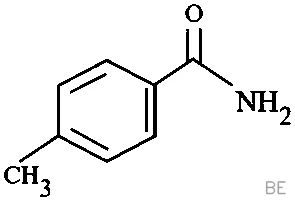
The sequence of reactions described represents the Hofmann Bromamide degradation of a primary amide, where compound 'A' (C8H9ON) is transformed into a primary amine 'B', confirming that 'A' is p-methylbenzamide (CH3C6H4CONH2). This amide undergoes the reaction with aqueous Br2/HO(−) to yield p-toluidine (CH3C6H4NH2), which is basic and thus soluble in dilute acid.
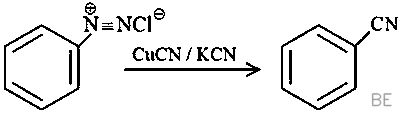
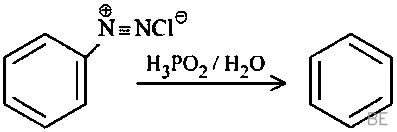
Treatment of p-toluidine with aqueous NaNO2/HCl at 0−5∘C performs diazotization, producing p-toluenediazonium chloride (compound 'C'), which further reacts with CuCN/NaCN via the Sandmeyer reaction to form p-tolunitrile (CH3C6H4CN, compound 'D'). Subsequent hydrolysis of p-tolunitrile yields p-toluic acid (CH3C6H4COOH, compound 'E'), a product also obtained from the hydrolysis of the initial amide 'A'.
Finally, the treatment of p-toluic acid with acidified KMnO4 results in the oxidation of the methyl group to a second carboxylic acid group, forming terephthalic acid (HOOCC6H4COOH, compound 'F'). This final structure contains exactly two distinct types of hydrogen atoms, namely the four equivalent aromatic protons on the benzene ring and the two equivalent acidic protons belonging to the carboxyl groups.