Q41JEE Main 2025NAT
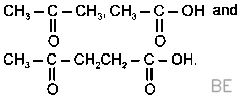
A compound ' ' absorbs 2 moles of hydrogen and ' X ' upon oxidation with gives and The total number of bonds present in the compound ' ' is ______
JEE Main · Chemistry
Generate JEE Main level questions on Aldehydes, Ketones and Carboxylic Acids. Focus on Nucleophilic addition and Aldol/Cannizzaro.
276 questions · 20 PYQs · 0 AI practice · JEE Main 2027
A compound ' ' absorbs 2 moles of hydrogen and ' X ' upon oxidation with gives and The total number of bonds present in the compound ' ' is ______
Given below are two statements: Consider the following reaction Statement (I): In the case of formaldehyde K is about 2280 , due to small substituents, hydration is faster. cStatement (II) In the case of trichloro acetaldehyde K is about 2000 due to -I effect of -Cl . case of trichloro K is about 2000 due to -I effect of -Cl . In the light of the above statements, choose the correct answer from the options given below:

The compounds which give positive Fehling's test are: Choose the correct answer from the options given below:

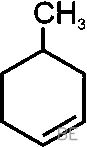
Aman has been asked to synthesise the molecule . He thought of preparing the molecule using an aldol condensation reaction. He found a few cyclic alkenes in his laboratory. He thought of performing ozonolysis reaction on alkene to produce a dicarbonyl compound followed by aldol reaction to prepare " ". Predict the suitable alkene that can lead to the formation of " ".


Which of the following arrangements with respect to their reactivity in nucleophilic addition reaction is correct?
In the Claisen-Schmidt reaction to prepare, dibenzalacetone from 5.3 g of benzaldehyde, a total of 3.51 g of product was obtained. The percentage yield in this reaction was ______ %.
An optically active alkyl halide reacts with hot KOH dissolved in ethanol and forms alkene [B] as major product which reacts with bromine to give dibromide . The compound is converted into a gas [D] upon reacting with alcoholic . During hydration 18 gram of water is added to 1 mole of gas on warming with mercuric sulphate and dilute acid at 333 K to form compound [E]. The IUPAC name of compound is:
Number of molecules from below which cannot give iodoform reaction is : Ethanol, Isopropyl alcohol, Bromoacetone, 2Butanol, 2-Butanone, Butanal, 2-Pentanone, 3Pentanone, Pentanal and 3-Pentanol.
A molecule ("P") on treatment with acid undergoes rearrangement and gives ("Q"). ("Q") on ozonolysis followed by reflux under alkaline condition gives (" ). The structure of (" R ") is given below.


" P " is an optically active compound with molecular formula . When ' ' is treated with dinitrophenylhydrazine, it gives a positive test. However, in presence of Tollens reagent, "P" gives a negative test. Predict the structure of "P".


The total number of compounds from below when treated with hot giving benzoic acid is :

Choose the correct option for structures of A and B, respectively


The product formed in the following reaction is


An organic compound with molecular formula is not readily oxidised. On reduction it gives which reacts with HBr to give a bromide which is converted to Grignard reagent. This Grignard reagent on reaction with followed by hydrolysis give 2, 3-dimethylbutan-2-ol. Compounds and respectively are
When undergoes intramolecular aldol condensation, the major product formed is :


The compounds that produce with aqueous solution are: Choose the correct answer from the options given below:

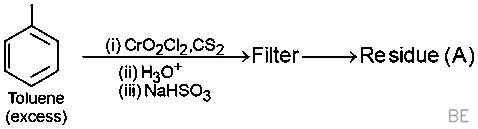
Residue (A) +HCl (dil.) Compound (B)Structure of residue (A) and compound (B) formed respectively is (A) (B)


Identify the structure of the final product (D) in the following sequence of the reactions: \mathrm{Ph}-\overset{\mathrm{O}}{\overset{\parallel}{\mathrm{C}}}-\mathrm{CH}_3 \xrightarrow[\Delta]{\mathrm{PCl}_5} A \xrightarrow{\text{3eq. } \mathrm{NaNH}_2/\mathrm{NH}_3} B \xrightarrow{\text{Acidify}} C \xrightarrow\[\text{2. H}_2\mathrm{O}_2/\mathrm{OH}^-]$ {\text{1. B}_2\mathrm{H}_6} D\mathrm{sp}^2D____$ .

Both acetaldehyde and acetone (individually) undergo which of the following reactions?A. Iodoform Reaction B. Cannizzaro Reaction C. Aldol Condensation D. Tollen's Test E. Clemmensen ReductionChoose the correct answer from the options given below:
Consider the following reactions. Form these reactions which reaction will give carboxylic acid as a major product? (A) (B) \mathrm{R}-\mathrm{MgX} \xrightarrow\[\text{ (ii) } \mathrm{H}_3\mathrm{O}^{+}]${\text{ (i) } \mathrm{CO}_2}\mathrm{R}-\mathrm{C}\equiv\mathrm{N} \xrightarrow$[\text{ (ii) } \mathrm{H}_3\mathrm{O}^{+}]${\text{ (i) } \mathrm{SnCl}_2/\mathrm{HCl}}\mathrm{R}\cdot\mathrm{CH}_2\cdot\mathrm{OH} \xrightarrow{\mathrm{PCC}}$ (E) Choose the correct answer from the options given below:

Want unlimited AI-generated Aldehydes Ketones And Carboxylic Acids questions?
Sign up free and practice with adaptive difficulty — Easy, Medium, Hard. New questions every session.
Start practising for free →